
From the Age of Hyper-Connectivity to Emotional Disconnection
We live in an age of unprecedented hyper-connectivity. Smartphones have become extensions of our bodies, and social media platforms have woven every corner of the global village together. Streams of information and constant digital interactions seem to form an unbreakable web.
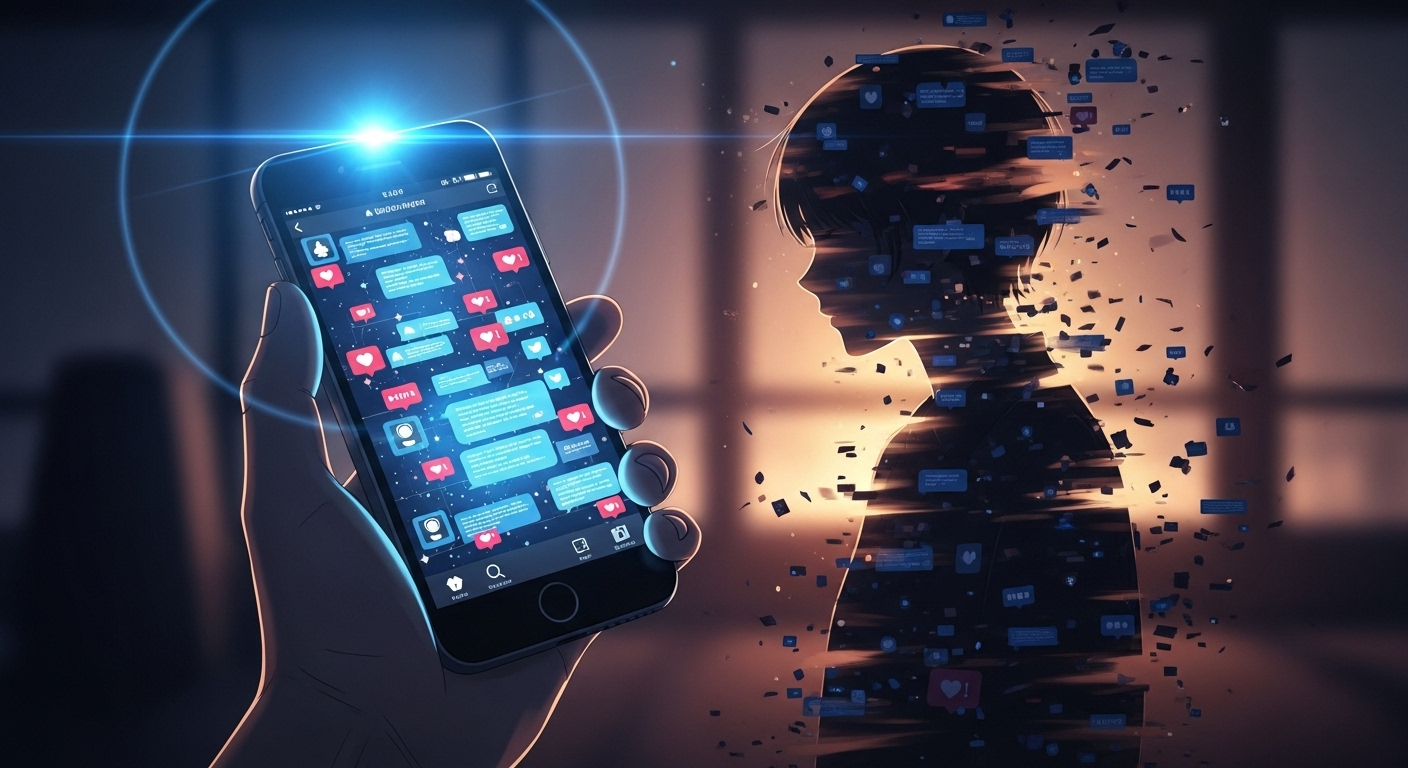
Yet a paradox emerges: even as physical and digital connections reach historic highs, feelings of loneliness are surging worldwide.
According to the OECD, loneliness has risen across many member countries—especially among the young and the elderly. In Japan, the Ministry of Health, Labour and Welfare repeatedly highlights the growing severity of loneliness and social isolation. Similarly, the renowned Harvard Study of Adult Development—an 80-year-long study on human happiness—has consistently shown that good relationships are the strongest predictor of well-being, while social isolation is one of the greatest threats to physical and mental health.
This raises an unsettling question: are we truly connected—or merely lost in the illusion of being seen, emotionally “unplugged” amid endless digital chatter?
The Psychology Behind Why “Digital Connection” Amplifies Loneliness
Performative Connection and Social Fatigue
The rise of social media has given birth to a new form of performative connection: we curate idealized versions of our lives, post filtered fragments, and seek validation through likes and comments. This isn’t authentic self-expression—it’s an ongoing performance.
- Social pressure, comparison anxiety, and image anxiety: In the infinite scroll of online content, we easily fall into the trap of social comparison. Seeing others’ glamorous moments makes us measure our own “shortcomings” against them, fueling deep-seated inadequacy and anxiety. To maintain our digital persona, we grow anxious about how we’re perceived—constantly monitoring our words and actions.
- Psychological terms: Social Comparison Fatigue refers to the mental exhaustion caused by continual social comparison. Impression Management Anxiety describes the tension that arises when we try to control others’ impressions of us. This constant self-monitoring consumes enormous emotional and cognitive energy—leaving us drained, even in social crowds.
The Fragmentation of Emotional Interaction
In the digital age, human interaction is becoming increasingly fragmented: likes, emojis, short comments, quick video calls. These interactions are plentiful in quantity but shallow in depth.
The brain struggles to find real satisfaction in fragmented contact: Genuine emotional nourishment comes from sustained, meaningful communication—through words, gestures, tone, and shared empathy. Fragmented exchanges can’t fulfill this need. It’s like replacing a full meal with endless snacks—you feel full, but starved of true nutrition. These “pseudo-connections” only deepen the sense of emptiness within.
Emotional Projection and the Hollow Echo Chamber
When real-world intimacy falters, people often redirect emotions toward virtual entities: AI chatbots, virtual idols, or parasocial relationships with online personalities.
The lack of genuine empathy creates an “echo-chamber loneliness”: While AI companions can simulate empathy and conversation, their responses are algorithmic—not born from lived emotional understanding. We project our feelings onto them and receive pre-programmed, predictable replies—cold echoes rather than warm resonance. This one-way interaction exposes the limits of virtual intimacy: even when we share our emotions, we may still feel unseen, unheard, and profoundly alone.
The Sociology of Loneliness: How the “Loneliness Economy” Became a Global Industry
As digital connectivity intensifies loneliness, a new global phenomenon has quietly emerged—the Loneliness Economy. Marketed as a cure for disconnection, it has paradoxically turned loneliness into a commodity.
- Japan: Facing aging and declining birth rates, Japan’s loneliness economy is especially mature. The government even appointed a Minister of Loneliness to combat social isolation. “Rental humans” who offer companionship—by chatting, dining, or walking with clients—have become common. AI companion robots are designed specifically for emotional comfort. In 2022, Japan’s loneliness economy was estimated to exceed one trillion yen.
- Western countries: In the U.S. and Europe, “emotional tech” startups and “well-being apps” are booming, promising emotional support and mindfulness. AI therapy bots now provide introductory counseling and meditation guidance.
- Aging, urbanization, remote work, and rising singlehood: Modern social structures have created fertile ground for loneliness. Aging populations face loss and shrinking social networks; urbanization erodes traditional community ties; remote work reduces face-to-face interaction; and the rise of non-marital and single living increases social isolation.
- The rise of “emotional outsourcing”: When people can’t find emotional fulfillment in relationships, they outsource their needs to paid services, digital platforms, or AI companions. This offers short-term comfort—but may weaken our ability to build and sustain real emotional bonds.
In short: Loneliness has been commercialized into a massive market. Yet despite these services, our deeper psychological need—to be truly understood—often remains unmet.
The Neuropsychology of Loneliness
- The Social Pain Theory: When people experience social rejection or emotional separation, the same brain regions activate as when they experience physical pain—particularly the anterior cingulate cortex (ACC).
- Chronic loneliness alters brain function and stress hormones: Prolonged isolation elevates cortisol, weakens immunity, disrupts sleep, and damages the hippocampus and prefrontal cortex—leading to anxiety, depression, and cognitive decline.
Key studies: 2019 UCLA Social Neuroscience Lab fMRI study; 2024 University of Tokyo research showing reduced mirror-neuron activation among chronically lonely individuals.
Cultural Psychology: The Silent Loneliness of East Asia
- Japan’s “Hitori Culture” and the “Muen Society”
- China’s “endurance loneliness” and emotional restraint
- Contrast with Western “expressive loneliness”
Practical Reflections: Gentle Psychological Strategies Against Loneliness
1. Cultivate Deep, Authentic Connections
- Quality over quantity: Invest time and presence in a few meaningful relationships.
- Active Listening and Empathic Communication
2. Practice Emotional Externalization
- Journaling, voice memos, private video diaries.
3. Reframe Loneliness as a Period of Inner Integration
- Constructive Solitude: Treat solitude as nourishment for reflection and growth.
At the End of Connection Lies Understanding
In the AI age, technology has made connection effortless—but understanding rare. What we long for isn’t a reply; it’s to be understood. Technology can bridge physical distance, but only self-awareness and empathy can bridge emotional distance.